

“We need 7 seats, which one should we take?” The question comes up often with families arriving with three or more children, or who regularly drive the grandparents around. There is no shortage of models, from compact SUVs to large people carriers. What makes the difference is how the rear seats will really be used.
The third row: for whom, and how often?
In the most compact 7-seater SUVs, the third row is for occasional use: it suits children well, adults less so on a long trip. Large SUVs and people carriers offer a real third row where an adult sits comfortably, but they cost more, use more fuel and are harder to park in town.
Be honest about it: if the 7 seats are used every day for the children, a compact SUV is often enough. If they are used for adults, even now and then on a Jerusalem–Eilat trip, go bigger.
| Your family | What matters | Type of car |
|---|---|---|
| 3 children, 7 seats now and then | Price, fuel use, parking | Compact 7-seater SUV |
| 4 children or more, 7 seats every day | Access to the third row, boot space | Large 7-seater SUV |
| Large family, adults in the back, lots of luggage | Room in every row, sliding doors | People carrier (7 or 8 seats) |
The boot with all 7 seats up
This is the most common trap. With the third row in place, the boot of a compact SUV often shrinks to a few shopping bags or a folded pushchair. For holidays with 7 people, you need a large SUV, a people carrier or a roof box. On the test drive, raise all 7 seats and put in the boot what you really carry.
Child seats: what Israeli law says
In Israel, a child must travel in a car seat or on a booster suited to their height and weight until the age of 8. The authorities recommend keeping the booster until around 10, or until 1.45 m. For a large family, that quickly means three or four seats to fit:
- count the Isofix anchor points and which seats have them: the third row does not always;
- check that three seats fit side by side in the second row, if that is what you need;
- see whether you can reach the third row without removing a child seat from the second.
Prices of 7-seaters in the catalogue
Here are the most affordable 7-seater SUVs and estate cars in the catalogue, at the starting price of the cheapest version:
John Auto catalogue on 27 October 2026: list price of the cheapest version, before the olim benefit. Prices change with the importers; each model’s page is up to date.
Some models come with 5 or 7 seats depending on the version: check on the model page that the version you choose has the third row.
Which model for your budget
Under ₪200,000: compact 7-seaters, well suited to a family with young children.
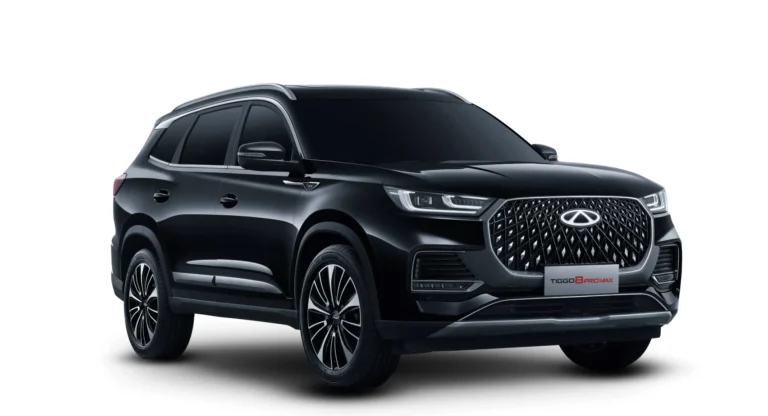 Chery Tiggo 8 Profrom 2,148 ₪/month*Olim benefit possible
 Mitsubishi Outlanderfrom 2,268 ₪/month*Olim benefit possible
 Dacia Joggerfrom 2,089 ₪/month*Olim benefit possible
* Example loan at 4.13% with no down payment, subject to approval. Catalogue price as of 29 October 2026.
From ₪200,000 to ₪260,000: more equipment and, for some, a roomier third row.
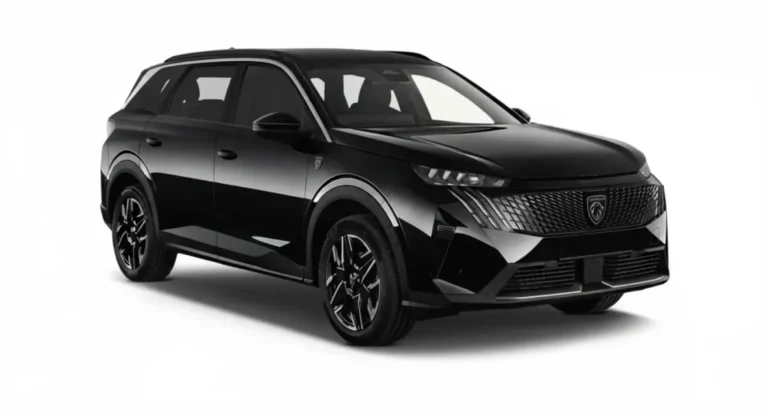 Peugeot 5008from 2,495 ₪/month*Olim benefit possible
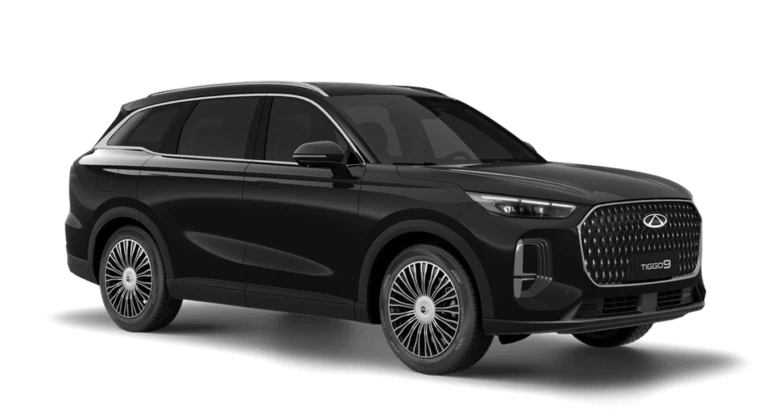 Chery Tiggo 9 Pro PHEVfrom 2,602 ₪/month*Olim benefit possible
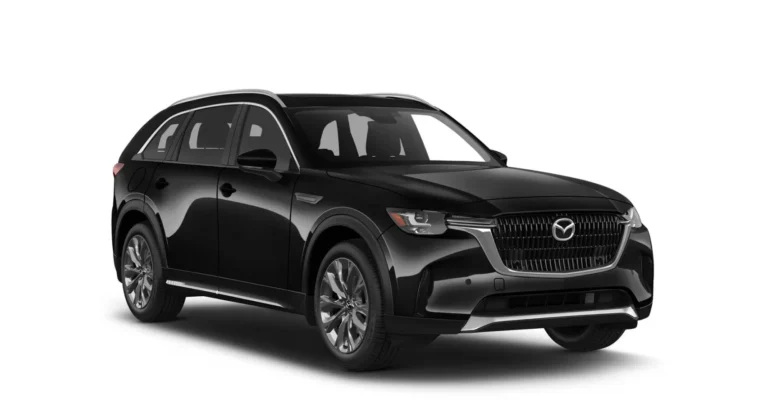 Mazda CX-90from 3,043 ₪/month*Olim benefit possible
Above that, large SUVs and people carriers, for those who often put adults in the back.
 Hyundai Santa Fefrom 3,939 ₪/month*Olim benefit possible
 Toyota Highlanderfrom 4,058 ₪/month*Olim benefit possible
 Kia Carnivalfrom 3,568 ₪/month*Olim benefit possible
Petrol, hybrid, plug-in or electric?
A 7-seater is heavy, so fuel use matters more than on a small car. A hybrid cuts the bill in town. A plug-in hybrid runs on electricity for everyday trips if you can charge it at home; otherwise it uses as much as a heavier petrol car. Electric 7-seaters exist (Kia EV9, Hyundai Ioniq 9, Maxus MIFA 7…), but their purchase price is higher.
For an oleh, the benefit also tips the balance. It removes the purchase tax: it saves the most on petrol, a real amount on hybrids and plug-in hybrids, and almost nothing on electric cars. On the model pages, the “Olim benefit possible” badge shows which models qualify. Our article on the cars with the biggest olim benefit explains the calculation.
Frequently asked questions
Do you need a special licence to drive a 7-seater?
No. The Israeli B licence lets you drive a car carrying up to 8 passengers besides the driver, up to 3.5 tonnes. Everyday family SUVs and people carriers fall into this category.
Is there a special discount for large families buying a 7-seater?
No, not on the purchase. An oleh can use their benefit on a 7-seater like on any other car, under the same conditions: one car only, bought within 3 years of aliyah.
Can you finance a 7-seater with no deposit?
Yes, it is possible depending on your file. The monthly payment shown on each model page is calculated with no deposit; you can redo it with your own term and deposit in the simulator.
Can a child sit in the front?
A baby seat may only be fitted in the front if the airbag for that seat is switched off. The Ministry of Health recommends that children travel in the back until the age of 13.
Sources: National Road Safety Authority, child passenger safety (car seat or booster compulsory until 8, recommended until 10); Ministry of Health, booster seats (1.45 m, children in the back until 13); Traffic Regulations, 1961 (seat compulsory from 3 to 8; regulation 180: B licence up to 3,500 kg and 8 passengers besides the driver); Tax Authority, tax guide for new immigrants (benefit by engine type). Prices: John Auto catalogue on 27 October 2026.